Introduction
Rescue dogs often need time to feel completely safe in a new home. For some, the adjustment becomes difficult when their trusted person leaves. This can lead to barking, destructive behavior, pacing, accidents, or frantic attempts to escape. These behaviors may indicate separation-related distress rather than disobedience.
Understanding the Signs of Separation Anxiety in Rescue Dogs: Proven Calming and Desensitization Routine can help owners respond appropriately. The goal is not to punish anxious behavior. Instead, effective support teaches the dog that being alone is safe and temporary.
A rescue dog may have experienced abandonment, shelter stays, multiple homes, or sudden changes. However, a difficult history does not automatically mean separation anxiety. The behavior must be considered carefully and, when necessary, evaluated by a veterinarian or qualified behavior professional.
What Is Separation Anxiety in Rescue Dogs?
Separation anxiety occurs when a dog experiences significant distress after being separated from a person or people they depend on. The distress can begin before the owner even leaves.
For example, your dog may become restless when you pick up your keys. They may follow you from room to room or watch the front door closely. Once you leave, the behavior may become more intense.
Common Signs of Separation Anxiety in Rescue Dogs: Proven Calming and Desensitization Routine include persistent barking, howling, whining, pacing, panting, drooling, destruction, house-soiling, and escape attempts. Some dogs may also become unusually quiet or refuse food when alone.

The most important clue is context. Separation-related behavior usually appears during isolation or when access to a preferred person is removed. This helps distinguish it from ordinary chewing, boredom, or territorial barking.
Why Rescue Dogs May Develop Separation Anxiety
Rescue dogs can experience several major changes within a short period. They may move from a shelter into a completely unfamiliar environment. Their smells, routines, people, sounds, and sleeping arrangements can all change at once.
Some dogs have also experienced previous abandonment or inconsistent caregiving. These experiences may affect how securely they respond to separation. A shelter stay itself can also be a stressful event for some dogs.
However, avoid assuming that every rescue dog has suffered trauma. Some rescue dogs adjust quickly, while others need considerably more time.
A sudden change in routine can also contribute. Moving house, returning to work, changing schedules, or spending significantly less time together can trigger separation-related problems.
Signs of Separation Anxiety in Rescue Dogs
One of the clearest signs is distress that consistently appears when the dog is left alone. Your dog might bark continuously, howl, whine, or scratch at doors.
Destructive behavior can also provide an important clue. Dogs experiencing separation distress may focus on exit points such as doors and windows. This differs from casual chewing that happens throughout the home.
House-soiling can occur even in a previously reliable adult dog. Stress may contribute to urination or defecation when the dog is alone. Still, medical causes should be considered before assuming anxiety is responsible.
Physical signs are equally important. Panting, pacing, trembling, drooling, restlessness, and inability to settle can indicate substantial emotional distress.
Some dogs become extremely attached to their owners. They follow them from room to room and become distressed when the owner prepares to leave. Yet being a “Velcro dog” alone does not prove separation anxiety. The behavior must be considered alongside what happens during actual separation.
Separation Anxiety or Boredom?
This distinction is important because the solutions are different.
A bored dog may chew an accessible object, investigate the trash, or become restless after insufficient activity. An anxious dog may repeatedly scratch the exit door, vocalize intensely, pace continuously, or remain unable to settle.
Recording your dog occasionally while you are away can provide useful information. Look at what happens during the first few minutes after departure and whether the behavior continues.
Do not deliberately leave a severely anxious dog alone simply to test them. The objective is to observe safely without repeatedly triggering panic.
It is also important to rule out other explanations. Medical problems, noise sensitivity, confinement anxiety, territorial behavior, and other behavioral conditions can produce similar signs. Veterinary assessment can help identify potential medical contributors.
The Proven Calming and Desensitization Routine
The foundation of separation anxiety treatment is gradual desensitization. Your dog should experience very short absences that remain below their panic threshold.
Start by creating calm independence inside the home. Encourage your rescue dog to relax on a bed while you remain nearby. Reward quiet behavior without constantly demanding interaction.
Next, introduce tiny moments of distance. Walk into another room and return before your dog becomes distressed. Repeat these short exercises while keeping your movements relaxed.
Over time, increase the distance and duration gradually. The progression should be based on your dog’s behavior rather than an arbitrary timetable.
For example, a dog may comfortably tolerate ten seconds alone but struggle at thirty seconds. In that situation, repeatedly practicing thirty-second absences may be too difficult. Return to an easier duration and build from there.
This approach teaches an important lesson: separation does not always predict something frightening.
Practice Departure Cues Without Leaving
Many dogs become anxious before their owners actually leave. Keys, shoes, bags, jackets, and opening the door can become warning signals.
You can reduce the emotional power of these cues through controlled practice.
Pick up your keys and then sit down. Put on your shoes and continue watching television. Walk toward the door without leaving.
The purpose is to break the connection between these actions and immediate isolation. Your dog gradually learns that these signals do not always mean a long absence.
Keep the exercises calm and predictable. Avoid exaggerated goodbyes because they can make departures more emotionally significant.
Create a Calm Home Environment
A predictable environment can make training easier. Give your dog a comfortable resting area where they can relax without being disturbed.
Background sound may help some dogs by reducing sudden environmental noises. A quiet radio or familiar household sounds can provide gentle auditory stimulation.
Food-based enrichment can also be useful when appropriate. A long-lasting chew or food toy may encourage relaxed independent activity. However, highly anxious dogs sometimes refuse food when distressed. Refusing a normally valuable treat can therefore be useful information about your dog’s emotional state.
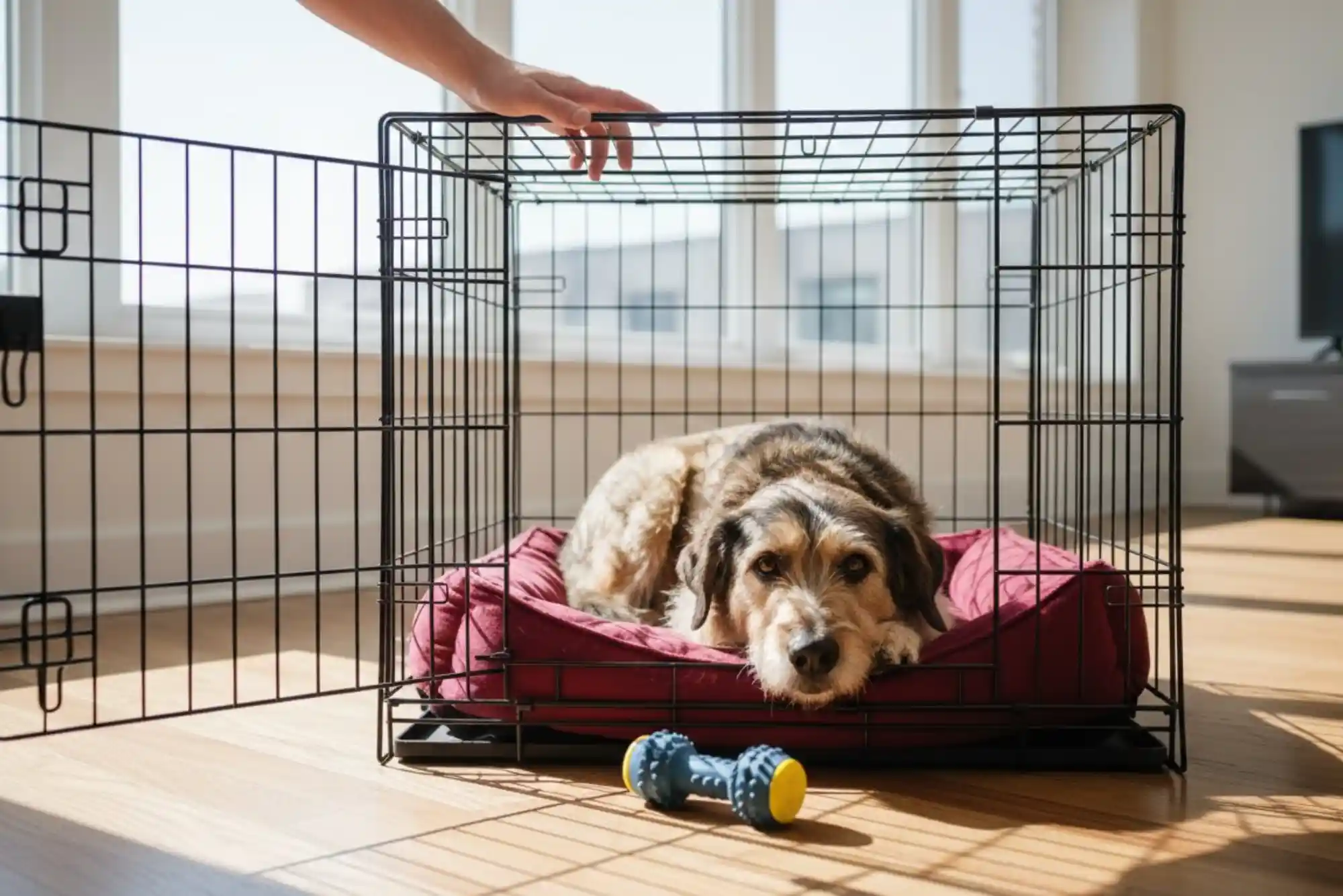
Crates require individual consideration. A crate can be helpful if your dog already views it as a comfortable resting place. However, forcing a severely distressed dog into a crate can intensify panic and may create injury risks.
Keep Departures and Returns Calm
Your behavior can influence the emotional atmosphere around separation.
Before leaving, avoid creating a dramatic goodbye routine. Instead, maintain a calm and predictable sequence.
When you return, allow your dog to settle before creating a highly energetic greeting. Calm arrivals and departures can reduce the emotional contrast between being together and being apart.
This does not mean ignoring your dog or withholding affection. It simply means keeping the transition predictable rather than turning every departure and arrival into a major emotional event.
Build Independence During Everyday Life
Desensitization works best when independence becomes part of normal life.
Encourage your rescue dog to rest independently while you work, read, or perform household tasks. Reward calm behavior without requiring constant physical contact.
You can also provide opportunities for your dog to explore safe areas independently. Short periods of independent relaxation can gradually strengthen confidence.
Exercise and mental enrichment are helpful parts of a balanced routine. However, exercise should not be viewed as a cure for genuine separation anxiety. A tired dog can still experience significant panic when separated.
The central goal is emotional learning. Your dog needs repeated experiences showing that temporary separation is safe.
When Professional Help Is Necessary
Severe separation anxiety should not be handled through punishment or forced exposure.
If your dog attempts to escape, injures themselves, destroys doors or windows, cannot settle, or experiences intense panic, contact a veterinarian or qualified behavior professional.
Professional support is especially important when the problem appears suddenly. A veterinary examination can help identify medical conditions that may contribute to behavioral changes.
Some dogs benefit from a combination of behavior modification and veterinary treatment. Medication, when prescribed, can sometimes reduce anxiety enough for a dog to participate successfully in training. It should always be discussed with a veterinarian.
How Long Does Separation Anxiety Training Take?
There is no universal recovery timeline. Every dog has a different history, temperament, environment, and anxiety level.
Some dogs make noticeable progress within weeks. Others require months of carefully managed training. Severe cases can require longer-term professional support.
Progress should be measured by behavior rather than the calendar. A dog that calmly handles a slightly longer absence has made meaningful progress.
If your dog struggles, reduce the difficulty rather than abandoning the process. Successful desensitization depends on keeping exercises manageable.
Frequently Asked Questions
How do I know if my dog has separation anxiety?
Look for distress that happens mainly during separation. Common signs include persistent vocalization, pacing, panting, destruction, house-soiling, escape attempts, and extreme distress around departure cues. Following you constantly is another possible clue, but it does not diagnose separation anxiety by itself.
How can I stop my dog from having separation anxiety?
Use gradual desensitization rather than suddenly increasing alone time. Begin with absences your dog can tolerate comfortably. Then increase duration slowly while maintaining calm behavior. Keep departures predictable and provide appropriate enrichment.
How long does it take to cure separation anxiety in dogs?
There is no fixed timeline. Mild cases may improve relatively quickly, while severe anxiety can require months of consistent behavior modification and professional support.
Can crate training help a dog with separation anxiety?
It depends on the individual dog. A crate may help when the dog already considers it a safe space. However, a dog experiencing confinement anxiety or severe panic may become more distressed inside a crate.
Can getting a second dog help separation anxiety?
A second dog is not a reliable treatment for separation anxiety. The problem may involve separation from a specific person rather than simply being alone. Adding another dog can therefore fail to address the underlying issue.
Conclusion
Recognizing the Signs of Separation Anxiety in Rescue Dogs: Proven Calming and Desensitization Routine is the first step toward meaningful improvement. Barking, destruction, pacing, accidents, drooling, and frantic escape attempts should be treated as possible signs of distress rather than stubbornness.