Introduction
Bringing an older rescue dog home can be incredibly rewarding, but dogs with an uncertain history may need more than basic obedience training. Some become distressed when left alone, panic around confinement, or react strongly to noises, unfamiliar rooms, or changes in routine. Learning how to crate train an older rescue dog in this situation requires patience because the goal is not simply to make the dog stay inside a crate. The real goal is to help the dog feel safe enough to relax there.
A crate can become a comfortable retreat, but it should never be introduced as punishment or forced on a frightened dog. Research into separation-related behavior also suggests that confinement can affect individual dogs differently, making it important to watch the dog’s actual emotional response rather than assuming a crate will automatically reduce anxiety.
For an older rescue with separation fears or phobias, successful crate training is a gradual process built around trust, predictable routines, positive reinforcement, and careful observation.
Understand Why an Older Rescue Dog May Fear the Crate
Before you start to crate train an older rescue dog, consider what the crate might represent from the dog’s perspective.
A dog that spent years in a stable home may simply have never learned what a crate means. A rescue dog, however, may have experienced kennels, transportation, shelters, confinement, abandonment, or other stressful situations. Even without knowing the dog’s complete history, you can assume that unfamiliar confinement may feel threatening.
Separation fear adds another layer. If your dog becomes anxious whenever you leave the room, closing a crate door can intensify that reaction. The dog may associate the closed door with losing access to you.

Phobias can make training even more complicated. Thunder, fireworks, traffic sounds, unfamiliar people, vacuum cleaners, or sudden movements may cause a dog to panic. An anxious dog cannot learn effectively while overwhelmed.
That is why crate train an older rescue dog should never mean simply shutting the door and waiting for the dog to “get used to it.”
Rule Out Medical Problems Before Training
Older dogs deserve a health check before beginning a demanding behavior program. Pain, reduced hearing or vision, mobility problems, gastrointestinal issues, and age-related cognitive changes can influence anxiety and behavior.
A dog that suddenly becomes restless, vocal, confused, or unusually fearful may not have developed a training problem. There could be an underlying medical reason.
This is particularly important when an older dog develops nighttime anxiety or suddenly struggles with separation after previously being comfortable alone. Veterinary assessment should come before assuming the behavior is purely emotional.
Once medical concerns have been addressed, you can create a training plan that fits your dog’s physical and emotional abilities.
Choose a Crate That Makes Your Dog Comfortable
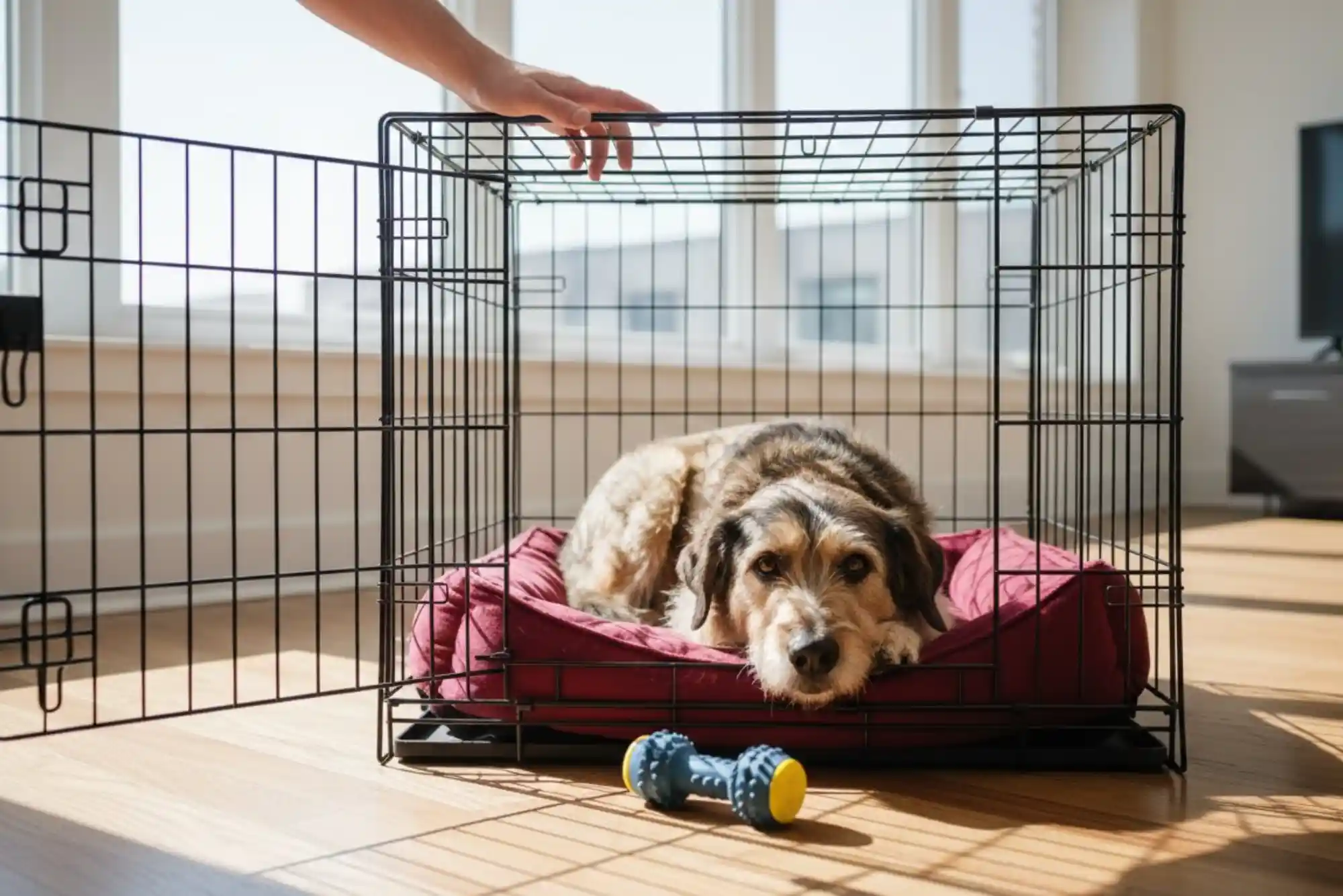
The crate should allow the dog to stand naturally, turn around, lie down, and change positions comfortably. An older dog may also need extra consideration for stiff joints or arthritis.
A crate with an easy-to-access door can be preferable for a dog with mobility limitations. Soft bedding may help, although dogs that chew or destroy bedding should be monitored carefully.
Location matters as well. A crate placed in a busy hallway may expose a nervous dog to constant movement. On the other hand, putting a highly anxious rescue dog alone in an isolated room can make separation fears worse.
Start somewhere calm but socially connected. Your dog should be able to see or hear you without being constantly disturbed.
The objective when you crate train an older rescue dog is to make the crate feel like a predictable resting area, not a place where the dog disappears from the family.
Build a Positive Association Before Closing the Door
The first stage of crate training should involve almost no confinement.
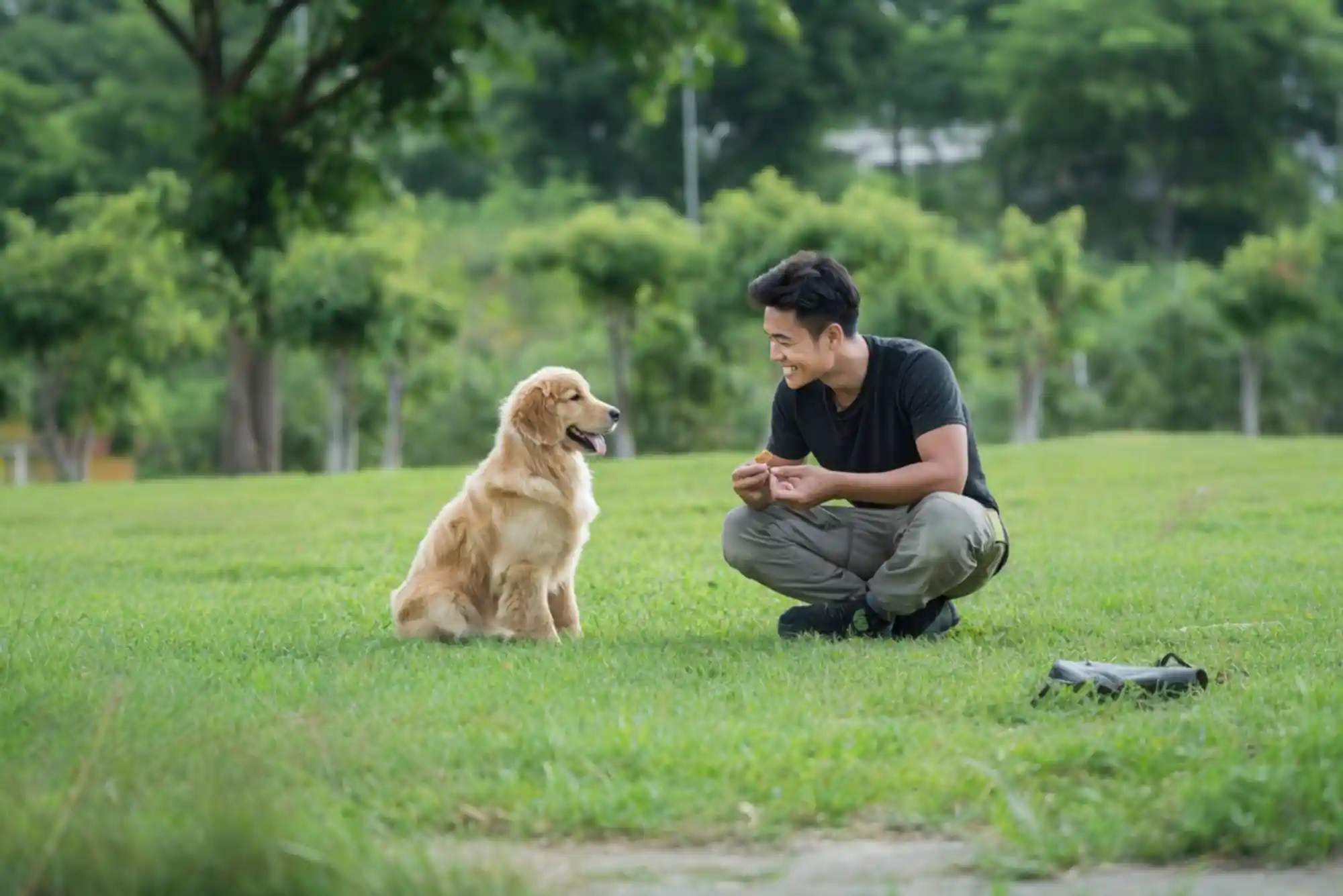
Leave the crate door open and allow your dog to investigate it freely. You can place treats near the entrance and gradually move them farther inside. If your dog steps inside voluntarily, reward the choice calmly.
Do not push, pull, drag, or physically place a fearful dog inside.
You can also feed meals near the crate. If your dog becomes comfortable, move the food bowl closer to the entrance and eventually inside. This allows the dog to discover that good things happen around the crate.
For some rescue dogs, this stage may take several days. For others, it may take weeks. There is no prize for finishing quickly.
When you crate train an older rescue dog, confidence is more important than speed.
Teach the Dog That the Crate Door Is Not a Threat
Once your dog willingly enters the crate, you can begin introducing the door.
At first, touch the door without closing it. Reward calm behavior. Later, move the door slightly and immediately open it again.
Eventually, close it for only a second or two while your dog remains relaxed. Open it before anxiety appears.
Gradually increase the duration.
If your dog starts panting, pacing, whining intensely, drooling, scratching frantically, biting the crate, or attempting to escape, you have probably increased the difficulty too quickly. These behaviors are not signs that the dog needs harsher discipline. They are information telling you to make the exercise easier.
A good rule is to work below the dog’s panic threshold. The dog should experience manageable challenges rather than repeated episodes of overwhelming fear.
Separate Crate Training From Separation Training
One of the most important points when you crate train an older rescue dog is understanding that crate comfort and being alone are separate skills.
A dog may happily sleep in a crate while you are sitting nearby but panic as soon as you leave the room. That does not mean the crate training failed.
Start by practicing very small separations.
Put your dog in the crate with a safe enrichment activity while you remain nearby. Stand up, sit down, walk a few steps away, and return. Gradually increase the distance.
Later, briefly disappear behind a doorway and come back.
Only after your dog can handle these small absences should you begin practicing actual departures.
This process is a form of gradual desensitization. Instead of repeatedly exposing the dog to a long absence that causes panic, you create manageable experiences in which being alone remains safe.
Practice Departure Cues Without Leaving
Many dogs begin showing anxiety before their owner actually leaves.
They may react when you pick up your keys, put on shoes, grab a bag, or walk toward the front door. These behaviors can become predictors of separation.
You can change those associations by practicing departure cues without actually leaving.
Pick up your keys and sit down. Put on your shoes and read a book. Walk toward the door and return to the room.
Repeat these exercises calmly.
Over time, the dog learns that these actions do not always predict a long absence.
This can be particularly valuable when you crate train an older rescue dog because it prevents the crate from becoming linked exclusively with your departure.
Use Food and Enrichment Strategically
Food can make crate training much more rewarding, but it should not be used to disguise overwhelming fear.
A long-lasting food toy, stuffed enrichment toy, or appropriate chew can help a relaxed dog settle. Introduce these items while the dog is already comfortable in the crate.
If your dog normally loves food but suddenly refuses a favorite treat when you close the crate door, take that seriously. Severe anxiety can suppress appetite.
The goal is not to keep the dog distracted while panic continues. The goal is to create an environment where the dog genuinely feels safe enough to eat, rest, and relax.
Work Carefully With Phobias
A rescue dog with phobias may need a broader behavior plan than crate training alone.
Suppose your dog fears thunderstorms. Putting the dog into a crate during a severe storm for the first time could create a powerful negative association. Instead, introduce the crate during calm periods and gradually build its value as a safe resting place.
For sound-sensitive dogs, background noise may sometimes help reduce the impact of sudden environmental sounds. Familiar bedding and a predictable routine can also provide useful environmental consistency.
Never intentionally expose a severely fearful dog to frightening stimuli at full intensity in an attempt to “toughen” them up. Fear-based flooding can make the emotional response worse.
Know When to Stop and Change the Plan
One of the biggest mistakes owners make when they crate train an older rescue dog is treating distress as disobedience.
A dog frantically attempting to escape may injure its teeth, paws, nails, or body. A dog that repeatedly panics in confinement may be telling you that a crate is currently the wrong management option.
In some cases, a secure dog-proofed room, exercise pen, or gated area may be a better temporary solution.
A crate is a tool, not a requirement.
If confinement consistently causes severe distress, forcing the issue can undermine the trust you are trying to build. Some dogs benefit from crate training eventually, while others are safer and calmer with an alternative setup. Evidence on separation-related behavior also supports evaluating the individual dog’s response rather than assuming crates are universally helpful.
Keep Sessions Short and Predictable
Older rescue dogs often benefit from training sessions that are short enough to maintain confidence.
Several calm repetitions are generally more useful than one long session that ends in panic.
Create a predictable routine around training. Give your dog an opportunity to exercise appropriately, eliminate, settle down, and enter the crate voluntarily. Keep your voice and movements calm.
Consistency matters because anxious dogs often find unpredictable environments harder to understand.
Do not measure success only by how many minutes your dog remains inside the crate. Look for softer body language, relaxed breathing, voluntary entry, normal eating, resting, and the ability to disengage from you without panic.
Those are signs that emotional learning is taking place.
Avoid These Common Crate Training Mistakes
When people crate train an older rescue dog, they sometimes rush because they need the dog to tolerate being alone immediately. Unfortunately, urgency can produce setbacks.
Never use the crate as punishment. Never force a terrified dog inside. Avoid suddenly increasing crate duration from a few minutes to several hours. Do not assume barking automatically means stubbornness.
It is also risky to use the crate as the only solution for separation anxiety. If the underlying problem is panic about being alone, simply adding confinement may intensify the distress.
Positive reinforcement and gradual progression are especially important with dogs that have difficult histories. Research has also associated aversive training approaches with greater risk of unwanted separation-related behavior, reinforcing the value of reward-based methods.
When Professional Help Is Necessary
Some rescue dogs can make excellent progress with careful home training. Others need professional support.
Seek help if your dog repeatedly injures itself trying to escape, experiences severe panic, cannot tolerate even very short separations, shows aggression related to fear, or makes little progress despite consistent training.
A veterinarian can evaluate medical contributors and discuss whether additional treatment is appropriate. A qualified behavior professional can then help create a gradual plan based on your dog’s specific triggers and responses.
Professional help does not mean you have failed. With serious anxiety, getting the right support early can prevent months of frustration.
How Long Does It Take to Crate Train an Older Rescue Dog?
There is no universal timeline.
Some adult dogs become comfortable with a crate within days. Others require several weeks or longer, especially when they have a history of fear or negative confinement experiences. Older dogs are absolutely capable of learning new behaviors; the process simply needs to respect their previous experiences and individual temperament.
When you crate train an older rescue dog, think in terms of progress rather than deadlines.
If your dog willingly enters the crate today when previously refusing to approach it, that is meaningful progress. If the dog can remain relaxed behind a closed door for 30 seconds today and two minutes next week, that is progress too.
Slow training is still successful training.
Help Your Rescue Dog Feel Safe First
Learning how to crate train an older rescue dog with separation fears and phobias is less about controlling the dog and more about changing what the crate means.
Start with safety. Rule out health problems, choose comfortable equipment, create positive associations, and let your dog approach the crate voluntarily. Build duration gradually, separate crate training from alone-time training, and pay close attention to signs of stress.
Most importantly, remember that an older rescue dog is learning more than a command. They are learning that their new home is predictable, that their person returns, and that being alone does not have to mean being abandoned.
If your dog is struggling, do not rush the process. Adjust the difficulty, celebrate small improvements, and consider professional guidance when anxiety is severe. With patience and thoughtful training, many older rescue dogs can learn to view their crate as a peaceful place rather than a source of fear.
FAQs
Is it cruel to crate train an older dog?
No. Crate training is not inherently cruel when the crate is introduced positively, sized appropriately, and used responsibly. The problem occurs when a crate is used as punishment or when a frightened dog is forced to remain confined despite severe distress.
For a rescue dog with significant separation anxiety, owners should first determine whether confinement actually helps or worsens the dog’s emotional state.
Can an older rescue dog learn to love a crate?
Yes. Older dogs can learn new behaviors, including developing a positive association with a crate. Dogs with difficult histories may simply require more time and smaller training steps.
When you crate train an older rescue dog, focus on voluntary entry, rewards, comfort, and calm repetition rather than forcing compliance.
Can crate training help with separation anxiety?
It can help some dogs, but it is not a universal treatment for separation anxiety. A crate may provide a comfortable resting space for a dog that already feels safe there. For another dog, confinement may increase panic.
Watch your dog’s behavior carefully and consider professional guidance if separation distress is severe.
How long does it take to crate train an older dog?
The timeline varies considerably. Some dogs adapt within days, while others may need several weeks or longer. A rescue dog with previous confinement trauma or significant anxiety may need an especially gradual approach.
The dog’s emotional comfort should determine the pace rather than an arbitrary schedule.
What should I do if my older dog refuses to enter the crate?
Do not force the dog inside. Leave the crate door open and reward any voluntary interest, such as looking at it, approaching it, or placing one paw inside.
You can gradually make the area more attractive with comfortable bedding and appropriate food rewards. If the dog remains intensely fearful, consider working with a qualified behavior professional.
Can I crate my rescue dog with separation anxiety while I am at work?
That depends on the dog’s ability to remain calm when confined. A dog with severe separation anxiety should not simply be placed in a crate for a full workday as a training strategy.
If the dog panics, attempts to escape, or injures itself, a crate may be unsafe. A veterinarian or qualified behavior professional can help you develop a safer management and behavior plan.
What if my dog starts barking or whining in the crate?
First determine whether the dog needs a bathroom break or is experiencing genuine distress. If the vocalization is accompanied by frantic scratching, heavy panting, drooling, escape attempts, or other signs of panic, stop increasing the difficulty.
Return to a shorter, easier training period and rebuild gradually. The goal when you crate train an older rescue dog is calm confidence, not simply making the dog endure confinement.