Introduction
A reliable recall is one of the most valuable skills you can teach a dog. When your dog comes immediately after hearing your cue, you can interrupt dangerous behavior, prevent escapes, and give your dog more freedom safely. But teaching a dog an emergency recall command requires more than repeatedly shouting “come” at the park.
An emergency recall is different from an everyday recall. It is a special cue reserved for situations where your dog needs to turn away from something immediately. The cue should have an exceptionally strong history of rewards, and it should never become an ordinary word your dog hears dozens of times a day.
The goal is not to create a magical command that guarantees a response in every conceivable situation. No recall is 100% reliable, especially around traffic, wildlife, unfamiliar dogs, or other extreme distractions. Instead, you are building the strongest possible response while using sensible management such as leashes, secure fencing, and long lines.
What Is an Emergency Recall Command?
An emergency recall command is a special word, phrase, or whistle that tells your dog to immediately abandon what they are doing and return to you.
Your everyday recall might be “Come” or “Here.” An emergency recall should ideally be different. You might choose a distinctive word such as “Quick!” or “Now!” or use a whistle that your dog does not hear in normal conversation.
The important part is not the particular word. The power comes from what that sound predicts.

When the cue consistently means “run to my person and something fantastic happens,” your dog develops a powerful positive association with it. Trainers commonly recommend keeping this cue separate from routine requests so it does not lose its special meaning.
Why Emergency Recall Matters
Imagine your dog slipping through an open gate and heading toward a road. Perhaps they have spotted a rabbit and are running in the opposite direction. Calling their name repeatedly may not be enough.
An emergency recall gives you another trained response to use when seconds matter.
It can also help when a dog approaches an unsafe area, picks up something dangerous, or becomes focused on another animal. Still, the command should be considered one layer of safety rather than a substitute for responsible supervision.
How to Teach a Dog an Emergency Recall Command
The most effective approach is to build the response gradually. Start in an environment where your dog is almost guaranteed to succeed, then slowly introduce distance and distractions.
Choose a Completely New Cue
If your dog already ignores “come,” do not keep shouting it louder. A cue that has been repeated without a response can lose its effectiveness.
Choose a short, distinctive word or whistle. Everyone who handles the dog should understand that this cue has a special purpose.
Once you choose it, protect it. Do not use the emergency cue to call your dog for a bath, nail trimming, punishment, or another unpleasant activity.
Select an Exceptional Reward
The reward needs to be better than your dog’s ordinary training treat.
Think about what genuinely excites your dog. Small pieces of cooked chicken, cheese, roast meat, freeze-dried treats, or a favorite toy can work depending on the individual dog. The BC SPCA specifically recommends very high-value foods when building an emergency recall.
The reward should be easy to deliver immediately. Timing matters because your dog needs to connect the reward with responding to the emergency cue.
Charge the Emergency Cue
Start somewhere quiet, such as your living room.
Say the emergency cue once. Immediately produce the jackpot reward and make the experience exciting. You are not testing whether your dog can recall yet. You are teaching the dog what the sound predicts.
Repeat this in short sessions over several days.
Your dog should begin to hear the special sound and immediately expect something wonderful. Some trainers recommend practicing the association regularly for a couple of weeks before adding significant distractions.
Build a Strong Everyday Recall First
An emergency recall works best when it is supported by good everyday recall training.
For normal recall, choose a separate cue such as “come.” Begin at home, where distractions are minimal. Call your dog from a short distance and reward the moment they reach you.
Do not immediately jump from the living room to an open dog park.
Dogs do not automatically understand that a behavior learned in one location applies equally well somewhere completely different. A dog that responds beautifully in your kitchen may struggle when surrounded by squirrels, scents, people, and other dogs.
Gradually increase difficulty instead of testing the dog before they are ready.
Use a Long Line for Outdoor Practice
A long training line allows your dog to experience distance and outdoor distractions while you maintain a safety connection.
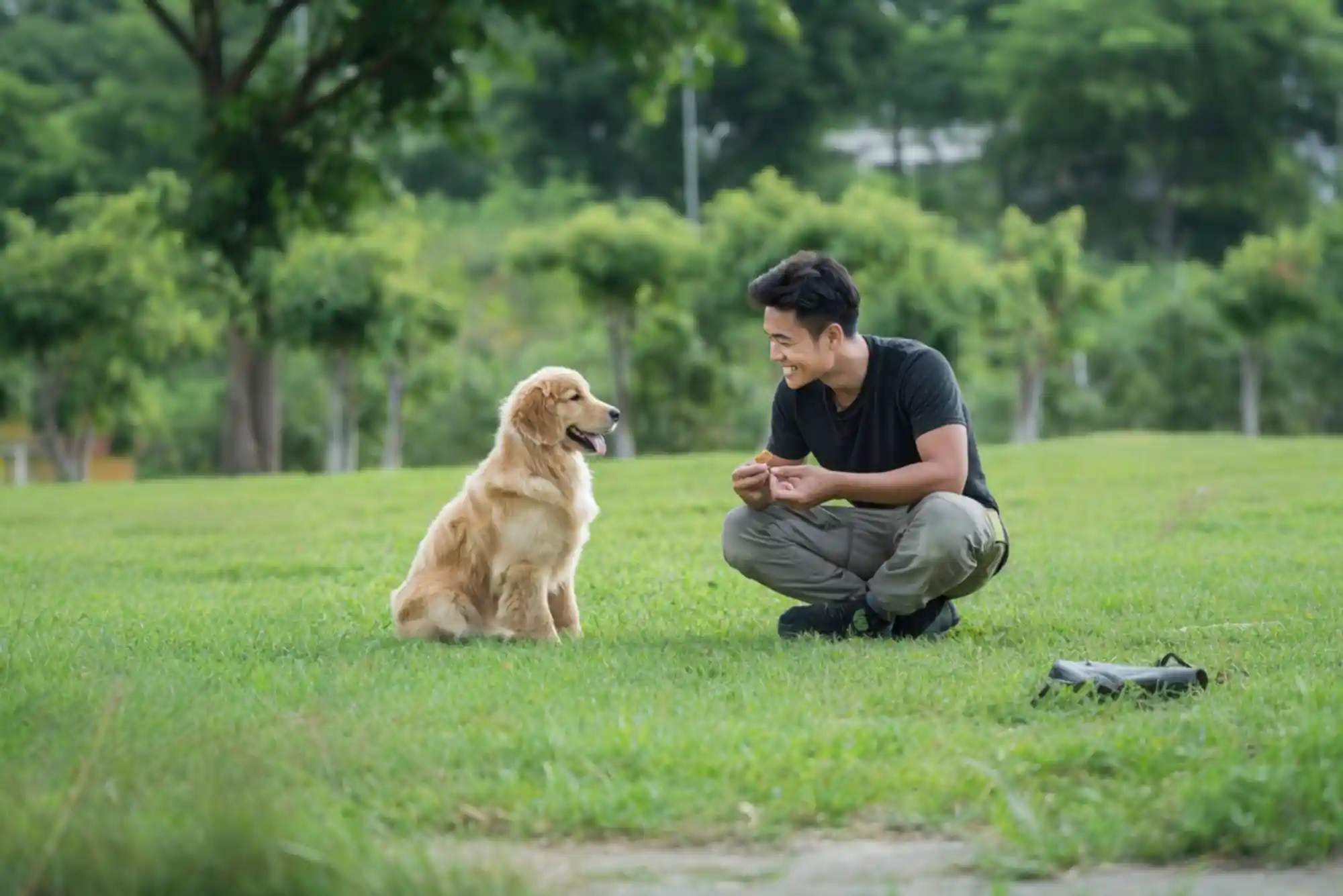
Choose a secure area and allow your dog to explore. Give your recall cue when the distraction level is manageable. When your dog turns and comes toward you, reward generously.
The long line is not intended to punish or jerk the dog toward you. Its purpose is to prevent your dog from repeatedly practicing the habit of ignoring the recall.
This gradual approach is particularly important before allowing off-leash freedom in unfenced areas.
Make Coming Back More Rewarding Than Leaving
A dog is constantly making choices based on what is happening around them.
If your dog is sniffing an interesting patch of grass, greeting another dog, or chasing a scent, simply saying “come” may not seem valuable enough.
This is why reinforcement matters.
When your dog responds quickly, reward the behavior generously. You can use food, praise, play, or another reward your dog genuinely values.
You can also use a “come, reward, release” pattern during ordinary training. Call your dog, reward them, and then allow them to return to what they were doing when it is safe.
This teaches your dog that coming to you does not always mean the end of freedom. That is important because owners frequently weaken recall by calling the dog only when playtime is over.
Never Punish Your Dog for Coming
This rule is extremely important.
Suppose your dog ignores you for 30 seconds, runs around the yard, and finally returns. You may feel frustrated. But if you scold the dog when they arrive, they can learn that returning to you leads to something unpleasant.
Next time, they may stay away even longer.
Even when the response is slow, reward the arrival. You can work on improving the response during future training sessions.
The recall cue should remain emotionally safe. Your dog should believe that getting to you is always a good decision. Reward-based approaches are widely recommended for building reliable behaviors without making the recall itself threatening.
Avoid Repeating the Recall Command
One of the most common recall mistakes sounds like this:
“Come!”
Nothing happens.
“Come! Come on! Come here! COME!”
Eventually the dog wanders over.
The problem is that repeated commands can teach the dog that the first cue does not really matter.
Say the cue once whenever possible. If your dog is too distracted to succeed, reduce the difficulty rather than repeating the word louder. Move closer, use a lower-distraction environment, or return to long-line practice.
Good recall training is about creating successful repetitions, not testing your dog’s limits every time you practice.
Progress Through Distractions Slowly
Once your dog responds reliably indoors, begin increasing the challenge.
Practice in the yard, then a quiet outdoor area, and eventually places with controlled distractions. Increase only one major difficulty at a time. You might increase distance first and distraction later.
Watch your dog’s body language.
If your dog repeatedly ignores the cue, the environment may simply be too difficult. Go back to an easier level and rebuild success.
A reliable recall is usually developed over weeks and months rather than in a single training session. Basic recall can develop relatively quickly in a quiet environment, while dependable responses around wildlife, dogs, and other high-value distractions can require considerably longer proofing.
Teach the Collar Grab as Part of Recall
Getting your dog physically close is not always enough.
In a real emergency, you may need to secure their collar or harness before they can run away again.
During ordinary recall practice, reward your dog for reaching you, then calmly touch or hold their collar for a second before giving another reward. Gradually make this normal.
This prevents the dog from learning to stop just outside your reach.
Keep the exercise positive. You want your dog to think that being caught after a recall is perfectly safe and predictable.
Practice Emergency Recall Without Overusing It
The emergency cue should remain special.
Do not use it every time you want your dog to come inside. Do not use it to end every walk. Do not use it when you are annoyed.
Instead, maintain its strength through occasional controlled practice with an exceptional reward.
If you ever have to use the emergency recall in a genuine crisis, return to easy training afterward. Rebuild the association with several successful jackpot repetitions so the cue remains powerful.
The less casually you use the cue, the more meaningful it remains.
Common Emergency Recall Training Mistakes
Several habits can quietly weaken an otherwise promising recall.
Calling your dog only when something unpleasant is about to happen makes the cue less attractive. Repeating the command teaches the dog that responding immediately is optional. Practicing in environments that are too difficult creates unnecessary failures. Punishing a dog after they return can also damage the association you have worked hard to create.
Another mistake is expecting food alone to solve every problem. Rewards are essential during learning, but training also needs progression. Your dog must gradually learn to respond around different distances, locations, smells, animals, and levels of excitement.
Finally, avoid assuming that a good recall means your dog is ready to run freely everywhere. Some environments are simply too risky for off-leash dogs, regardless of training level.
How Long Does Emergency Recall Training Take?
There is no universal timeline.
Some dogs develop a strong response to the cue relatively quickly in quiet environments. Reliable performance around real-world distractions takes much longer because the behavior has to be practiced across many different situations.
Your dog’s age, temperament, previous training, motivation, environment, and reinforcement history all affect progress.
Short, successful sessions are usually more productive than long sessions where the dog becomes tired or repeatedly fails. Think in terms of building a habit rather than completing a fixed course.
Can an Emergency Recall Really Work Every Time?
No responsible trainer should promise a 100% response in every situation.
Even a highly trained dog can make an unexpected decision when frightened, injured, highly aroused, or confronted with an unusually powerful distraction. Reliable recall reduces risk, but it does not eliminate it.
That is why emergency recall should be combined with good management. Use a leash near traffic, secure gates and doors, appropriate fencing, identification, and a long line when your dog’s off-leash reliability is still developing.
The goal is not to create an invincible dog. The goal is to give your dog the strongest possible reason to choose you when it matters.
Build a Recall You Can Trust
Learning how to teach a dog an emergency recall command is less about finding a magic word and more about building a powerful history of trust and reinforcement.
Choose a unique cue, pair it with an exceptional reward, practice in easy environments, and gradually introduce distance and distractions. Protect the cue by never using it casually or punishing your dog after they return.
Most importantly, do not rush the process. A recall that could protect your dog in a dangerous situation deserves hundreds of successful, positive repetitions before you depend on it.
FAQs
How do I teach my dog to come when called?
Start indoors with a clear cue and minimal distractions. Say the cue once, encourage your dog toward you, and immediately reward the arrival. Gradually add distance and distractions while continuing to reinforce successful responses.
What is the best recall command for a dog?
There is no single best word. “Come” and “Here” are common choices, while a whistle can be useful because it has a consistent sound and can carry over distance. The most important factors are consistency and the positive reinforcement history behind the cue.
Why won’t my dog come when called?
Your dog may not understand that the cue requires an immediate response, or the environment may be more rewarding than returning to you. Recall can also weaken if the cue repeatedly predicts unpleasant experiences such as leaving the park or being punished.
How long does it take to train a dog to come when called?
Basic recall can improve within a few weeks of consistent practice, but reliable outdoor recall around major distractions usually takes substantially longer. Some dogs need several months of gradual proofing.
Should I use treats every time my dog comes?
During the early stages, rewarding every successful recall helps establish a strong behavior. As the response becomes reliable, you can vary rewards while continuing to provide valuable reinforcement for difficult recalls.
Can an older dog learn an emergency recall?
Yes. Adult and senior dogs can learn new recall behaviors. The training process may need to account for the dog’s previous experiences, hearing ability, motivation, and physical limitations, but age alone does not prevent learning.